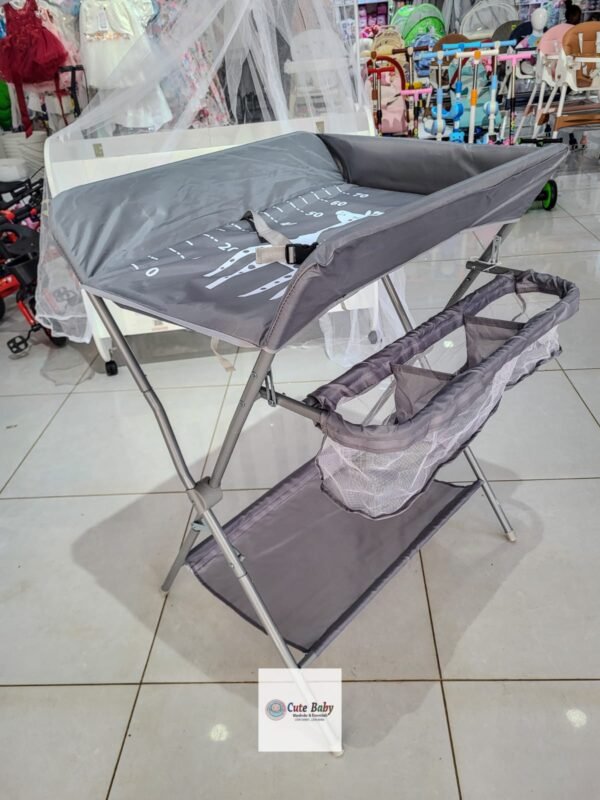
A thoughtfully organised changing area helps you find what you need while keeping your attention on your baby. You can set one up in a nursery, a bedroom corner or another suitable space at home. Start with the changing surface, then arrange a small supply of everyday items around the way your household actually works.
Measure the available space and think about where you will stand or sit. Leave a clear route to the area and room to use any drawers or cupboards without awkward reaching.
The NHS guide to changing a nappy recommends a changing mat or towel on the floor. If you use a raised changing table, never leave your baby unattended or turn away, and do not rely on straps to keep them secure.
For any changing furniture, follow its own assembly and use instructions, including the weight limit and any other restrictions. Check that it is correctly set up before each use. If you are considering a folding baby changing station, review the current product information and ask for any missing dimensions or instructions before buying.
Start with the supplies you already use rather than filling every shelf. A simple kit can include:
The American Academy of Pediatrics advises keeping changing supplies within your reach and out of your baby’s reach. Arrange everything before starting a change. If something is missing, take your baby with you to get it rather than stepping away from a raised surface.
Use separate baskets or drawer sections for nappies, clean clothing and spare supplies. Keep the changing surface itself clear of stored items. Avoid stacking so much into a basket that you need both hands to unpack it during a change.
Store only a small working supply nearby and keep extra packs elsewhere. This makes it easier to notice when nappies are running low or when the spare outfit no longer fits.
Simple labels can help everyone who shares baby care find the same items. “Clean clothes,” “nappies” and “refills” are enough. Choose words or labels that make sense to the people using your home.
Choose a practical place for used clothing and arrange for it to be removed regularly. Follow the care instructions for the mat, furniture, covers and clothing, including any instructions about suitable cleaning products.
Keep cleaning products and waste bags out of your baby’s reach. After a change, wash your hands and clean the area as needed; the NHS nappy-changing guide also covers this everyday hygiene routine.
If you wash small loads often, a modest supply of spare clothes may work well. If washing and drying take longer in your household, plan your clothing rotation around that. Check the baby vest listing when replacing a basic, and confirm the size and care details.
Before using the area with your baby, check whether you can reach each essential from your changing position. Move anything that requires stretching or turning away. Keep the arrangement consistent so another caregiver can use it easily.
Review the setup as your baby grows, and continue following the equipment’s limits and instructions. A brief restock and tidy at a convenient time can keep the area ready. Browse Cute Baby Shop’s baby essentials for the items your setup actually needs.
Discover baby clothing, changing essentials and gifts in our shop.
WhatsApp us